Most Telegram channel admins think of their channel as content. Posts go out, subscribers read, some percentage converts to ad revenue. That's the model: build an audience, sell them ads.
But channels that accept user-generated content — classifieds, job boards, real estate feeds, deal rooms — have a bigger opportunity. The channel isn't just content. It's a marketplace. And marketplaces can monetize in ways content channels never could.
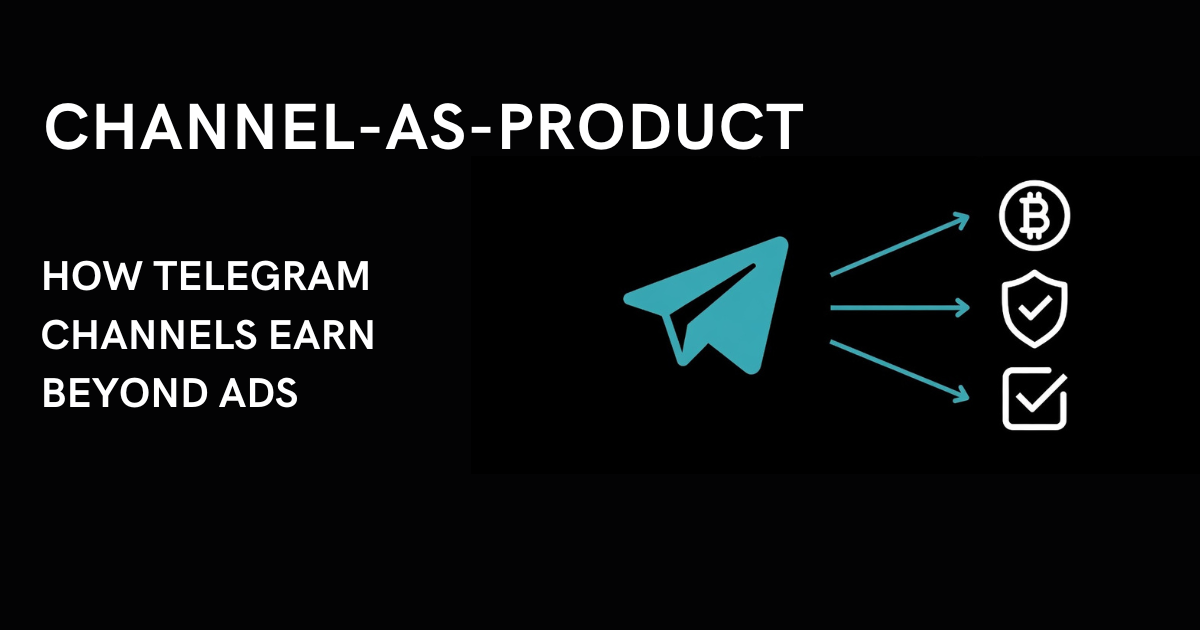
This article is about a shift in how to think about Telegram channels: from channel-as-feed to channel-as-product. With structured intake, moderation, and optional paid features for submitters, a single channel (or a network of channels) becomes a product with multiple revenue streams — not just an ad slot.
The Limits of Ad-Only Monetization
If your entire revenue model is "sell ad placements in the channel," you're capped by three things:
• Subscriber count — ad rates scale with audience size
• Niche — some niches pay far more per impression than others
• Advertiser demand — you need buyers, and buyer demand is cyclical
For a channel of 1,000–10,000 subscribers in a mid-tier niche, ad revenue is often a few hundred dollars a month at best. And it takes effort — finding advertisers, negotiating rates, posting the content, managing complaints.
Meanwhile, the actual value of the channel — the structured flow of listings, the daily engagement, the community formed around a specific topic — goes completely unmonetized beyond ads.
The Shift: Channel as Product
Any channel that accepts submissions from users is, fundamentally, a two-sided marketplace. There are submitters (sellers, recruiters, agents, posters) and consumers (buyers, job seekers, renters, readers). Content flows between them through the channel.
Once you frame the channel as a marketplace product, new questions emerge:
• What do submitters value? Speed, visibility, reach, trust
• What would they pay for? Faster publishing, better placement, verified status
• What friction can be removed for the admin? Manual formatting, copy-paste, chasing missing info
None of this requires external software. It just requires structured intake — which is exactly what Easy Post provides.
What Makes a Channel a Product
Three components turn a simple content channel into a marketplace product:

1. Structured intake
A Telegram bot form replaces DM chaos with required fields, button options, and photo uploads. Every submission arrives complete. The admin doesn't chase missing info. The submitter doesn't guess what format to use.
This isn't just convenience — it's the foundation. You can't build paid features on top of raw DMs. You can build them on top of structured data.
2. Moderation as quality control
Every submission passes through a moderation queue before publishing. The admin sees everything pending in one place, reviews, and approves or rejects. This turns the admin from "person who copy-pastes text" into "person who maintains quality."
Quality maintained across every listing = trust. Trust = audience stays. Audience staying = the channel is actually worth something.
Run a channel that takes listings, jobs or rentals? Easy Post for channel admins shows how the bot takes the intake off your hands.
3. Monetization layered on submissions
Once submissions are structured and moderated, the admin can offer paid options to submitters — without building anything technical. Common patterns:
• Instant publishing — pay to skip the queue or the schedule
• Featured placement — pay for pinned posts or extended visibility
• Verified status — pay for a badge or priority review
• Premium channels — paid access to a separate feed
Payments happen through Telegram Stars — native to Telegram, no Stripe, no bank integration, no subscription software. The bot handles the transaction. The admin sets the rules.
Example 1: FisHub — Single-Channel Marketplace
FisHub is a fishing equipment classifieds channel in Ukraine. Over 1,300 subscribers, 1,500+ listings published, almost 1 million views per year. Every listing comes in through a structured form — product name, description, price, city, contact, photos.
After submission, the seller gets a confirmation that their listing is in the moderation queue. This removes uncertainty — the submitter knows their post was received and will go live after approval.

Approved listings publish on a schedule — not instantly, but at a set frequency throughout the day. This matters: the channel doesn't flood subscribers, each listing gets visibility, and the feed stays active without looking spammed.

And this is where monetization enters. Recently, FisHub started accepting paid submissions. Sellers who want their listing published immediately — skipping the queue and the schedule — pay for an instant post via Telegram Stars. The first transactions have already come through.

This is monetization layered on top of the existing flow. No separate service, no extra setup. The submitter sees an option, pays if they want, and the bot handles the rest. The admin doesn't touch the payment — it just flows through.

For a single-channel marketplace, this creates a dual revenue stream: ad placements (for larger brands reaching the whole audience) plus paid submissions (for individual sellers who want faster visibility). Neither replaces the other.
Example 2: UyTap — Network of Marketplaces
UyTap operates as a network of 7 city channels across Kazakhstan, each covering property listings in one city. One bot collects all submissions. The Action Engine routes each listing to the correct city channel automatically.
The full UyTap case study covers the routing mechanics. But the monetization angle scales differently for a network: every city channel is a separate market with separate advertisers and separate paid submission options. A seller in Almaty pays for their listing's visibility in @uytap_ala. A seller in Astana pays for visibility in @uytap_ast. The same infrastructure — form, moderation, Action Engine — powers all 7 channels.
For network operators, the product becomes a platform. Each channel is a sub-market. Each sub-market has its own economics. The overall operation scales without adding operational overhead per city.
Why This Works Without Technical Overhead
The traditional way to build a paid-submissions product looks like this: custom bot (aiogram, Telethon), payment integration (Stars API directly), database for tracking paid vs free submissions, moderation interface, scheduling system. Weeks of dev work. Ongoing maintenance. A team.
With Easy Post, the same product is 5 minutes of configuration:
• Form with the fields your marketplace needs
• Moderation queue for approve/reject
• Action Engine for routing (if you run multiple channels)
• Paid submission options as bot features (native to the platform)
The admin goes from operator to operator-owner. The channel goes from content feed to marketplace product.
What to Build Next
If you run a Telegram channel that accepts user submissions, the question isn't "should I monetize beyond ads?" It's "what would my submitters pay for?"
Start with structured intake. Move to moderation. Once the flow is clean, add paid options on top — one at a time, testing what your audience values.
The technical work is handled. Your job is to understand the marketplace you've built and price its features.