One channel can grow on autopilot. A network of channels is a different challenge. The content needs to stay relevant in each niche, the publishing schedule needs to be coordinated, and the channels ideally cross-promote each other to share traffic. Doing this manually for 5+ channels turns into a part-time job.
This is the story of how we set up a network of philosophy quote channels on full autopilot — using InviteUp's content generation and cross-posting as the foundation. The point isn't the network itself; it's the operational pattern that makes niche channel networks viable for one person to run.
The setup
Philosophy quotes are a good niche for testing autopilot networks. The topic space is enormous — thousands of philosophers, traditions, schools of thought — and the format is repeatable. Each post is a quote with attribution and a brief context, paired with relevant imagery.
The network was set up around philosophical traditions: Stoicism, Eastern philosophy, modern thinkers, classical Greek, existentialism. Each channel has its own theme but they share an audience that overlaps — someone reading Stoic quotes is often interested in Eastern philosophy too.
The interesting question wasn't whether AI could generate quotes (it can). The interesting question was whether the entire network could grow as a system through cross-posting between related channels.
How content is generated
InviteUp's content plan handles the hard part. Once you define the channel theme — say, "Stoic philosophy quotes with modern context" — and set the publishing rhythm, the system generates content that fits the channel's voice for as long as you let it run.
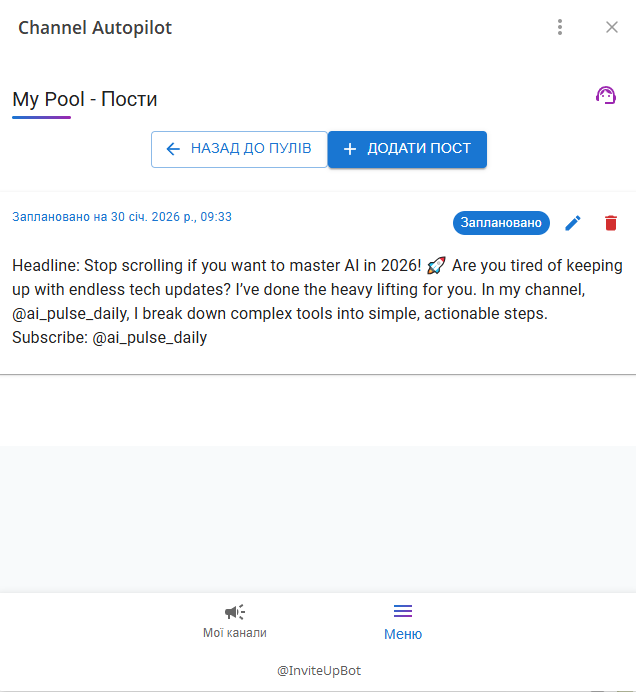
Each post follows the same pattern: a quote, attribution to the philosopher, a short context paragraph explaining the idea or its modern relevance, and a generated image that matches the mood. The image generation is what gives each channel a consistent visual identity — Stoic posts have one aesthetic, Eastern philosophy posts have another, and the difference is consistent across hundreds of posts.
An example from the network:
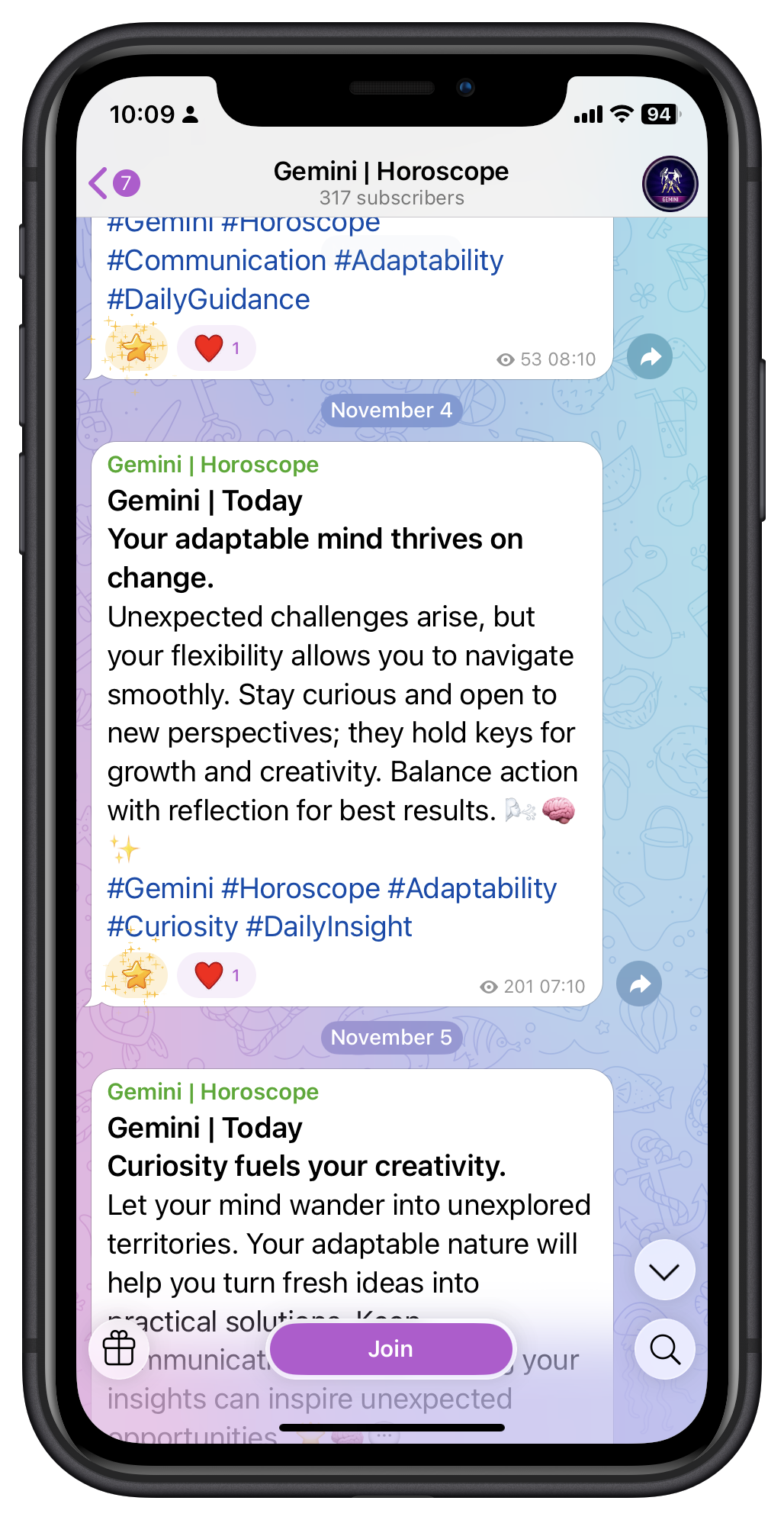
The content plan rotates through philosophers, eras, and themes to avoid repetition. After months of running, the channels still produce posts that feel fresh because the topic space is genuinely deep — there are more good philosophy quotes than any human could publish in a lifetime.
The cross-posting layer
This is where networks become more than the sum of channels. InviteUp's cross-posting feature lets you broadcast a single post to multiple channels simultaneously, with adjustable timing and content per channel. For a network of related channels, this solves the traffic problem — instead of growing each channel from zero, related channels mutually amplify each other.
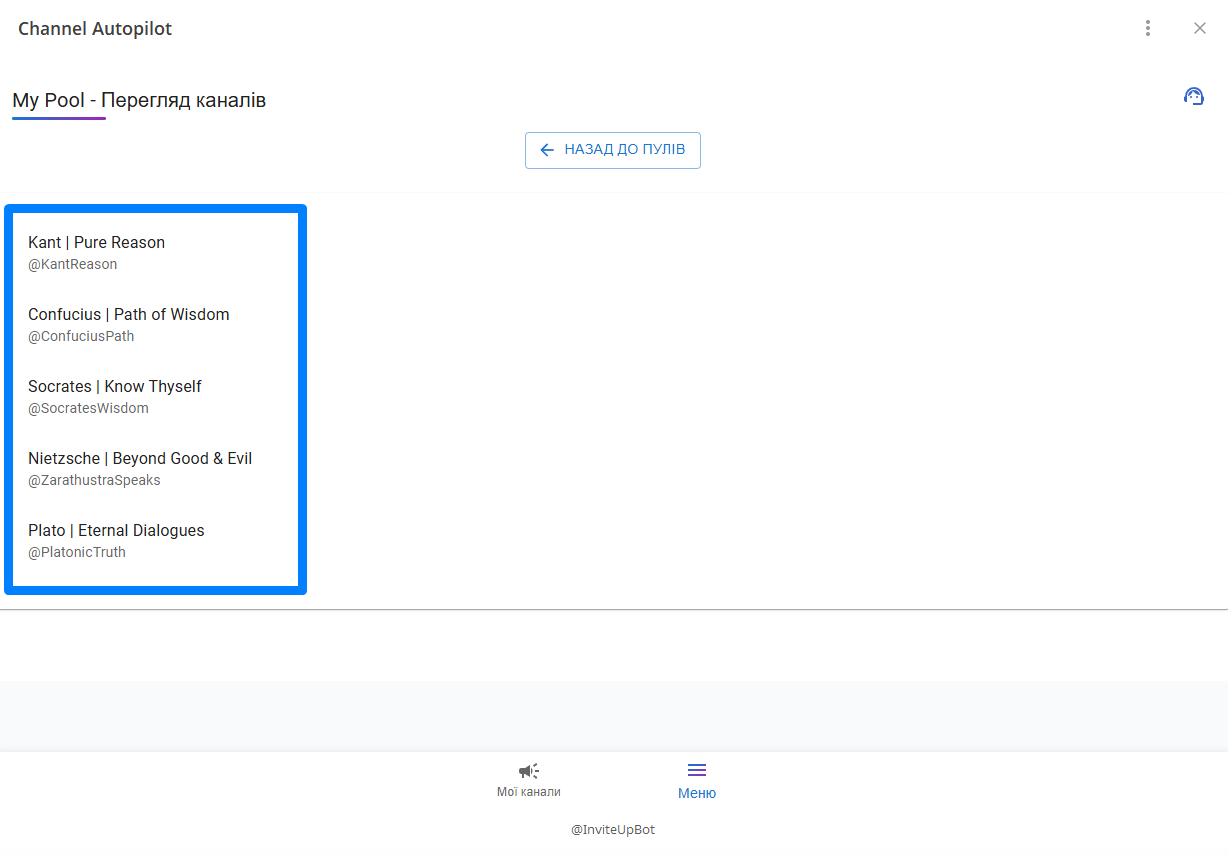
The pattern works like this: a high-engagement quote in the Stoic channel gets shared to the Eastern philosophy channel with a note like "if you enjoyed this, you might appreciate similar perspectives here." Subscribers from one channel discover the other. Over months, this builds an audience that subscribes to multiple channels, increasing total reach without increasing content production.
Crucially, this isn't spam. The cross-posts are curated — only quotes that genuinely fit both audiences get shared. The rest stay in the original channel. This is the difference between cross-posting as a growth mechanism and cross-posting as audience fatigue.
What works in autopilot networks
After running this for a while, three patterns became clear:
Topic adjacency matters. Channels in adjacent topics cross-promote well. Channels in the same exact topic compete with each other. Stoicism and Eastern philosophy are adjacent — they share an interest in mindfulness and personal practice but differ in flavor. Two Stoicism channels would just split the same audience.
Visual consistency anchors the channel identity. The AI-generated images need to follow consistent style rules per channel. The Stoic channel uses one color palette and aesthetic; the Eastern channel uses another. This is what makes each channel feel like its own brand instead of generic AI content.
Content cadence beats content volume. One post per day per channel works better than three posts a day. The audience expects one quality piece, not three throwaway ones. Autopilot makes high cadence tempting because it's free; resisting that temptation keeps engagement up.
Other niches where this network model works
The autopilot-network pattern isn't unique to philosophy. The same operational logic applies to:
Daily facts networks — separate channels for history facts, science facts, geography facts, all cross-pollinating
Language learning networks — channels per language with shared learning frameworks
Niche news networks — channels per industry vertical, cross-posting major industry-wide stories
Productivity content — separate channels for time management, focus, habits, decision-making
Recipe networks — channels by cuisine type, cross-posting universal cooking principles
The common thread: the niches break down naturally into related sub-niches, and the audience overlap is real but not 100%. Cross-posting expands reach without splitting audiences.
Where Easy Post fits in network setups
Pure content networks like the philosophy channels run on InviteUp without needing UGC infrastructure. But many networks benefit from a mixed model where part of the content is AI-generated and part comes from the audience.
For example: a productivity content network where most posts are AI-generated tips, but readers can submit their own productivity hacks through a structured form. Approved submissions get published with credit, increasing engagement and giving the network a community feel without sacrificing the operational simplicity of autopilot.
Easy Post handles this UGC layer through forms, moderation queues, and routing — submissions can be auto-published to specific channels in the network based on form fields (a productivity hack about time management goes to the time channel, a focus tip goes to the focus channel). This pairs naturally with InviteUp's content generation and cross-posting to create a hybrid network where the autopilot handles the routine content and the UGC layer handles the variety.
For more on UGC routing, see our materials on no-code form builders and automated workflows for Telegram intake.
What we learned
Running an autopilot network for several months changed our understanding of channel operations:
Networks are operationally easier than single channels. A single channel needs constant attention to stay engaging. A network spreads attention across multiple themes — the audience doesn't expect every channel to be your main project, just to deliver consistently in its niche.
Cross-posting is the multiplier. Without cross-posting, each channel is on its own. With cross-posting, the network grows as a connected ecosystem. This is the operational difference between running channels and running a network.
Niche depth determines longevity. Networks in deep niches (philosophy, history, science) can run for years without exhausting the topic space. Networks in shallow niches (current trends, viral content) burn out quickly.
Should you build a network like this?
If you have a niche where the topic space is deep and breaks naturally into related sub-niches, a network of autopilot channels is a viable project for one person to run. The setup time is significant — defining each channel's theme, calibrating the tone, configuring cross-posting rules — but the ongoing work is near zero.
The right tool stack depends on the network type. For pure content networks, InviteUp handles content generation and cross-posting in one platform. For hybrid networks where you want UGC alongside AI content, Easy Post adds the structured intake layer for community submissions.
The two work together: InviteUp keeps the content flowing automatically across the network, Easy Post adds the community layer when the network is ready for it. Together they cover the full operational stack — outbound content automation plus inbound community contributions.